
A-01 / Morning Routine
Light Exposure as a Wake-Time Anchor
Analysis of outdoor morning light's documented effect on circadian alignment and next-night sleep onset latency across six-week longitudinal observation.
Entry 281 — Rev. 1
An independent Jakarta-based journal examining everyday men's wellness through the lens of documented practice, peer-reviewed research, and practical habit formation. No shortcuts catalogued here.

Structured frameworks for the first 90 minutes of a day. Wake-time anchoring, hydration sequencing, and movement priming documented against published chronobiology.
Resistance-loading progressions, movement quality indicators, and weekly volume benchmarks drawn from current strength-research literature.
Whole-food sourcing priorities, macronutrient timing references, and lean eating frameworks grounded in registered dietitian publications.
Sleep-onset consistency, environmental calibration, and recovery depth assessment using wearable-device datasets and sleep-architecture research.
Cortisol-awareness practices, attentional recovery methods, and work-life rhythm documentation sourced from occupational wellness literature.
Skincare routine benchmarking, ingredient-level ingredient composition review, and everyday polish methods for the modern urban professional.

"Each entry in the Arneva archive represents a single documented observation — not an endorsement, not a directive. The reader constructs their own protocol."
Arneva operates as a documentation platform, not an advisory service. Every article, protocol log, and nutritional note published in this journal is sourced against peer-reviewed literature and reviewed by qualified nutrition professionals before indexing. The goal is accuracy of information, not commercialisation of outcome.
Men's wellness as a content category has suffered from overclaiming. Arneva was established in Jakarta to counter that tendency — to document what the published evidence actually supports, how active-lifestyle practices function across different body compositions, and what sustainable health practices look like when stripped of marketing language.
The archive now spans seven years of continuous documentation. Entries are dated, attributed, and version-controlled. Nothing is removed; corrections are logged as amendments alongside the original record.
Each topic begins with a systematic scan of published literature — peer-reviewed journals, registered dietitian publications, and indexed sports science sources. Grey literature is excluded unless corroborated.
Sources are graded on study design, sample size, and recency. Meta-analyses and randomised controlled trials receive priority weighting. Observational data is flagged explicitly.
Academic findings are translated into observable, measurable daily practices. No extrapolation beyond the cited data. Where evidence is limited, scope is clearly stated.
All entries are date-stamped and stored with revision logs. When new evidence updates a prior conclusion, the amendment is logged alongside the original — preserving the chronological record.
Analysis of outdoor morning light's documented effect on circadian alignment and next-night sleep onset latency across six-week longitudinal observation.
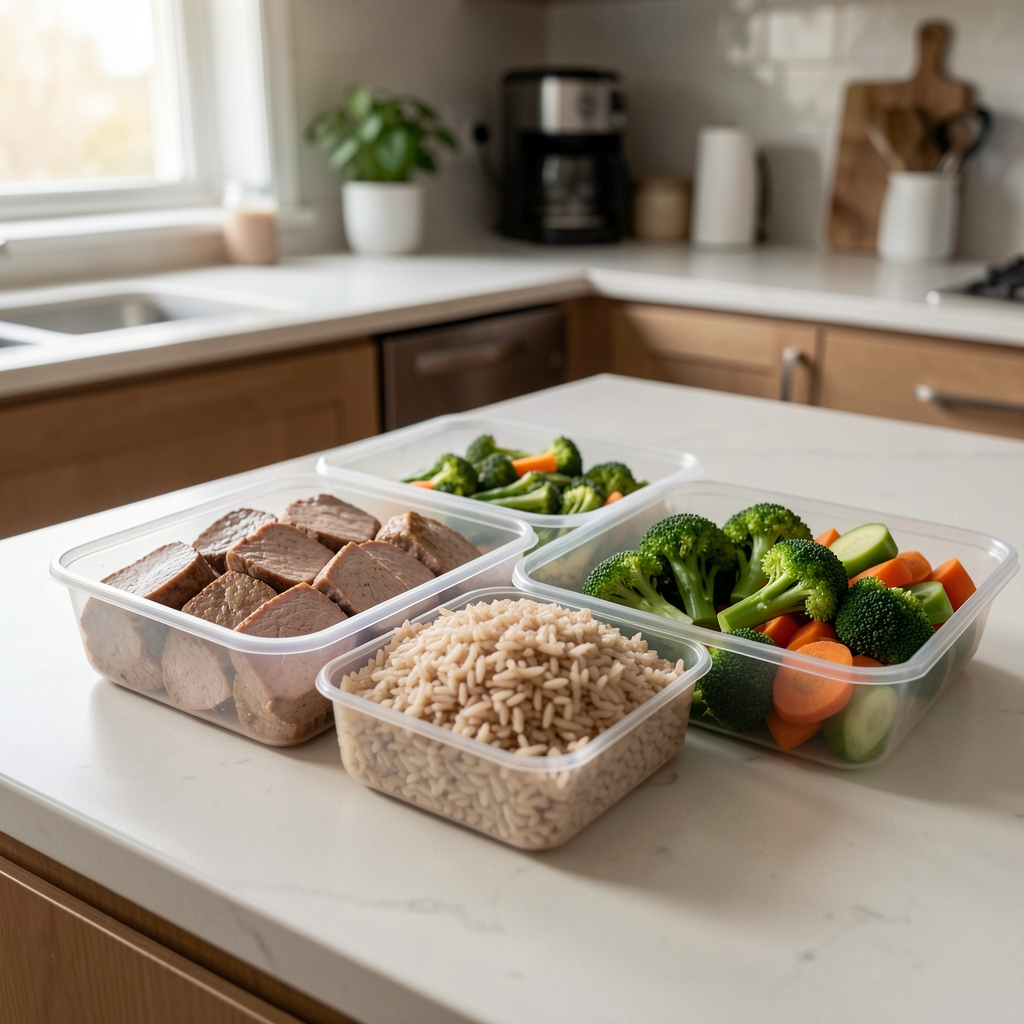
Documenting the per-meal protein-distribution model against muscle-protein synthesis data from current sports nutrition meta-analyses.

Blue-light filtration protocols compared across wearable-recorded sleep-onset data from a 30-day self-tracked cohort study.
Arneva presents health information in the way a lab notebook should — dated, sourced, and free of editorial inflation.
Responses are drawn directly from the Arneva editorial standard and sourced documentation, not from marketing copy.

Source enquiries, editorial correspondence, and reader feedback are handled through the contact office in Jakarta.